
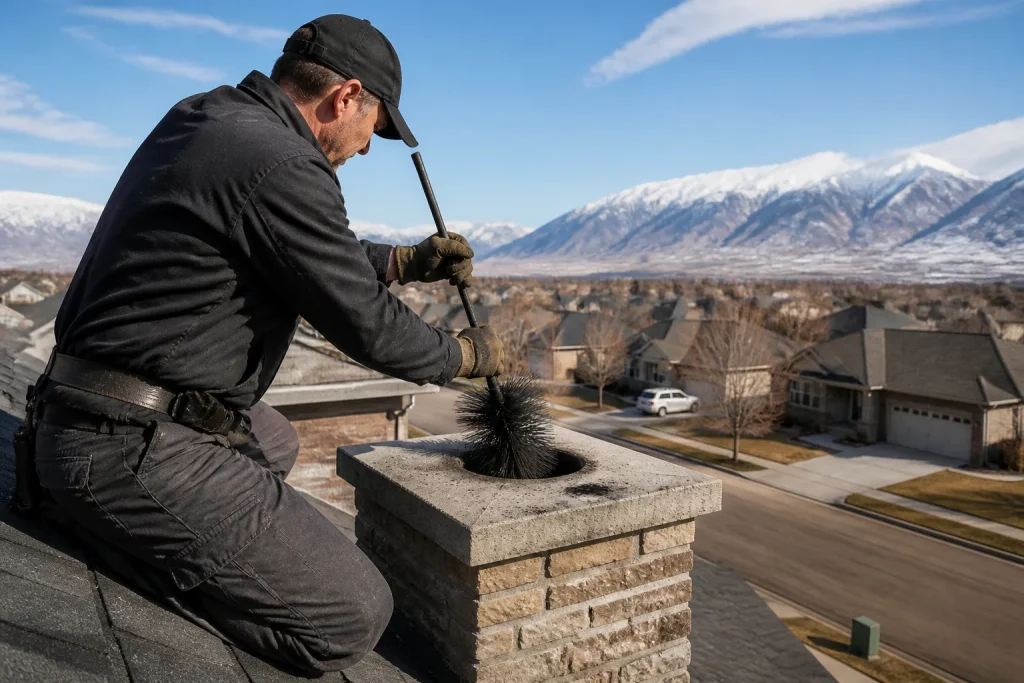
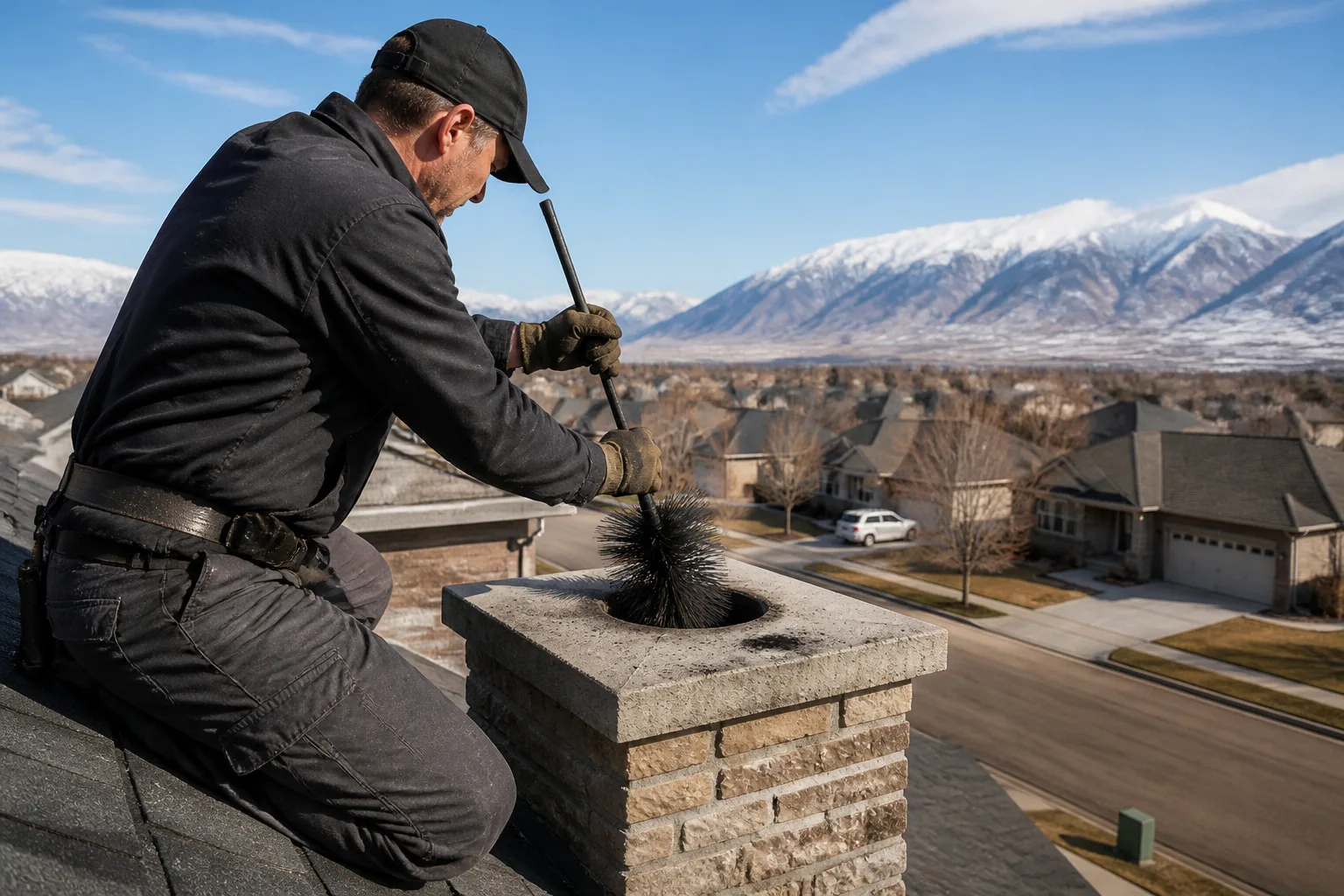
DuraFlex Chimney Sweep in Layton: A Homeowner’s Guide
If a sweep recommends relining your chimney with DuraFlex but can’t explain why it’s specified over a rigid stainless alternative for your particular flue shape and appliance type, that’s a problem. Material selection should follow a diagnosis, not a supplier catalog. DuraFlex is a flexible stainless liner system, and it’s genuinely the right answer for a lot of Layton chimneys – but “a lot” isn’t “all,” and the reasoning matters more than the brand name.
This guide covers what DuraFlex actually does, when it’s the correct call in Layton’s housing stock, how it stacks up against rigid and cast-in-place options, and how to confirm an installation was done properly. If you’d rather have a professional look at your flue than climb a ladder, call (888) 861-5852 and we’ll book a sweep and inspection.
What Is a DuraFlex Chimney Liner, and What Does It Actually Fix?
A DuraFlex liner is a flexible, corrugated stainless steel flue liner that gets pulled down through an existing chimney to create a new, continuous, sealed exhaust path from the appliance to the top of the chimney. It solves one core problem: a flue that can no longer safely contain and vent what your fireplace or stove produces.
In practice, that means it addresses:
- Cracked or spalled clay tiles – the original tile liner has fractured, and combustion gases or creosote can reach the masonry behind it.
- Gaps at tile joints – even where tiles look intact, mortar joints between them can be missing or eroded.
- Oversized flues – a flue that’s too large for the appliance runs cold and drafts poorly, which contributes to creosote buildup and smoke spillage.
- Offsets and bends – flues that jog sideways inside the chimney chase, which rigid pipe can’t easily navigate.
- Unlined chimneys – older masonry chimneys built without any tile liner at all.
What a liner does not fix is equally important. It doesn’t repair a crumbling crown, a cracked firebox, a damaged damper assembly, or masonry that’s pulling away from the house. Those are separate repairs, and any contractor who tells you a liner solves all of it is either guessing or selling. A liner is one component of a system, and the rest of that system still has to be sound.
Why DuraFlex Comes Up So Often in Layton’s Older Homes
Layton grew substantially in two distinct waves – the post-war years and again through the 1970s and 1980s – and the chimneys from both eras share a characteristic that makes flexible liners a common fit: offset clay tile flues. The masons who built these chimneys often jogged the flue around a framing member or offset it near the smoke chamber to keep the fireplace centered on the wall. It’s a perfectly normal construction practice.
It’s also exactly what rigid stainless pipe struggles with. Rigid sections come in straight lengths, and every offset requires an elbow fitting. On a flue with two or three bends in a tight chase, you either can’t get rigid pipe down, or you need so many fittings that the joints multiply and the install gets expensive and awkward. A flexible liner follows the existing path.
Layton’s climate adds to the pressure on these flues. Cold winters with wide temperature swings mean the masonry goes through repeated freeze-thaw cycles, and moisture that finds its way into cracked tiles or a failed crown expands and does damage each time. That’s one reason we treat a cracked tile liner as something to address rather than monitor. Northern Utah’s dry summers and cold, snowy winters also mean many Layton chimneys sit idle for months and then get worked hard once the burning season starts – a pattern that’s tough on any flue that isn’t drafting correctly.
DuraFlex vs. Rigid Stainless vs. Cast-in-Place: How the Options Compare
Three liner approaches dominate residential work, and they’re not interchangeable. Here’s how they line up for a typical Layton install:
- Flexible stainless (DuraFlex and similar) – Best for offset, bent, or irregular flues and for retrofits into existing masonry. It’s the most common choice for wood-burning fireplaces and inserts in older homes. Installation is comparatively fast because no demolition is required.
- Rigid stainless – The strongest option where the flue is straight and accessible, and often the better specification for certain high-heat or high-efficiency appliances. If your flue has significant offsets, rigid pipe may not be practical.
- Cast-in-place (such as HeatShield ceramic resurfacing) – A poured or troweled ceramic lining applied to the inside face of the existing flue. It works well when the flue is structurally sound but the tiles are cracked or the joints are open, and it preserves the original flue dimensions. It’s not the right call when the flue is badly deteriorated or the wrong size for the appliance.
The honest comparison comes down to your specific flue. A straight, sound clay flue with minor joint erosion might be a good candidate for cast-in-place resurfacing. An offset flue with fractured tiles and no liner continuity is a flexible liner job. We carry the professional lines – DuraFlex, HeatShield, Gelco, Olympia Chimney, Famco, Copperfield – precisely so the specification follows the diagnosis instead of forcing one product onto every chimney.
What Correct DuraFlex Installation Actually Involves
Material quality is only half the job. A premium liner installed carelessly performs worse than a mid-grade liner installed correctly, and the shortcuts are invisible from the ground. Here’s what a proper installation includes:
- Accurate sizing. The liner diameter has to match the appliance’s venting requirements and the flue’s cross-section. Undersized liners restrict draft; oversized liners run cold and accumulate creosote. Sizing is a calculation, not a guess.
- Insulation wrap. An insulated liner maintains flue temperature, improves draft, and reduces creosote formation – and in many cases it’s required for the appliance to perform to specification. Skipping the wrap is one of the most common shortcuts we find.
- Top termination. The liner must be secured at the crown with a proper top plate and cap assembly, sealed against water entry. A liner that just pokes out of the flue without a sealed plate lets rain in and lets the liner shift.
- Bottom connection. The liner connects to the appliance or insert with the correct adapter and is sealed at the smoke chamber. This is where sloppy work most often shows up – a loose connection means gases can escape into the chimney cavity instead of going up the flue.
What do skipped steps look like? No insulation wrap. A liner held at the top with caulk and hope. No bottom adapter, so the liner sits loosely above the firebox. Any of those mean you paid for a liner and got a partially functioning flue.
How to Verify the Installation Was Done Right
You don’t need to know the trade to check the work. Ask for documentation and look at a few key points yourself.
Request a written record of the work: the liner manufacturer and product line, the liner diameter, whether insulation was installed, and photographs of the top termination and the bottom connection. A company that did the job properly will have those images. We include a camera inspection and photo report with our work so you can see what we saw.
Then verify:
- At the top – a sealed top plate with a listed cap, sitting level, with the liner visibly secured.
- At the bottom – a proper adapter and a sealed connection to the appliance, not a liner resting loose in the smoke chamber.
- Paperwork – a written warranty from the liner manufacturer that names the product installed and is transferable. Keep it with your home records; it matters when you sell or when an insurer asks about the flue.
Finally, run the appliance and watch. A correctly lined and connected flue drafts cleanly, with no smoke spillage at startup and no smell in the room after the fire dies down.
When to Call a Pro
A cracked clay tile liner or an offset flue is not a homeowner inspection job. It’s a confined space, the masonry can fail without warning, and the appliance connection involves combustion safety. Get a professional assessment before you make any call on relining – and if the flue is sound and simply needs cleaning, we’ll tell you that instead of selling you a liner.
In our experience, the sweeps that cause trouble are the ones that arrive, brush, and leave without checking the liner or crown. A proper chimney repair conversation starts with a real diagnosis. Our technicians have up to 8 years of experience, and we perform inspections as a standalone service so you get a structural assessment before any repair is recommended.
Related services in Layton: if you need a routine chimney sweep, or you’re weighing fireplace repair alongside the liner decision, we handle the whole system from the firebox to the crown.
The Bottom Line
DuraFlex is an excellent solution for Layton’s offset clay tile flues, damaged tile liners, and oversized flues that won’t draft properly – and it’s the wrong specification for a chimney that needs masonry work or cast-in-place resurfacing instead. The material matters. The installation matters more. Ask why the liner was chosen, request photos of the top and bottom connections, and keep the manufacturer’s warranty paperwork.
Our technicians have up to 8 years of experience, and we work with the professional-grade brands certified chimney professionals specify – not hardware-store substitutes. One company handles the sweep, the inspection, the repair, and the cap. If a chimney sweep in Layton is what you need first, we can start there.
If you’re in Layton and need help, Chimney Sweep Layton offers free estimates – call (888) 861-5852. We answer 24/7, with fast dispatch from 7am to 7pm, Sunday through Friday.
Frequently Asked Questions
Pricing varies with liner diameter, run length, whether insulation wrap is included, and any cap or crown work needed – so the honest answer is that it’s quoted per job after an inspection. We set the final price in a written estimate, and the estimate is free. Call (888) 861-5852 for an exact quote – estimates are free.
A properly installed and insulated flexible stainless liner is a long-term repair, but its lifespan depends on the appliance, fuel type, and whether the chimney is swept and inspected regularly. Manufacturer warranty terms define what’s covered, which is why the paperwork matters. Call (888) 861-5852 to discuss your specific setup – estimates are free.
It depends on the flue. If your clay tiles are cracked but the flue is essentially straight and correctly sized, cast-in-place ceramic resurfacing can be a strong option. If the flue has offsets, fractured tiles, or no liner continuity, a flexible stainless liner is usually the better fit. A camera inspection tells you which – and you’ll see the evidence. Call (888) 861-5852 for a free estimate.
Combustion gases and creosote can reach the masonry behind the tile through cracks and open joints, which raises the risk of a chimney fire and lets carbon monoxide migrate where it shouldn’t. In a Layton winter, freeze-thaw cycles also widen existing cracks. It’s worth an inspection before the burning season starts. Call (888) 861-5852. We answer 24/7; a call outside dispatch hours is booked into the next opening, Sunday through Friday, 7am to 7pm.
Written by the team at Chimney Sweep Layton.
Need Chimney Cleaning Help?
Call Chimney Sweep Layton - the local pro we connect you with is licensed and insured, here with fast help in Layton.
(888) 861-5852