
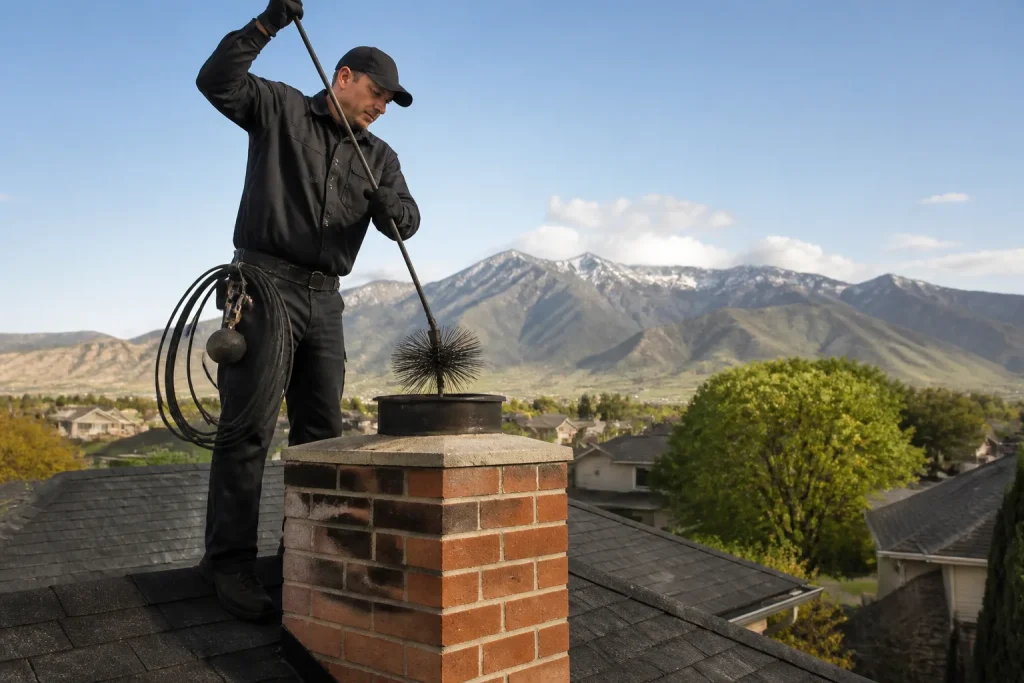
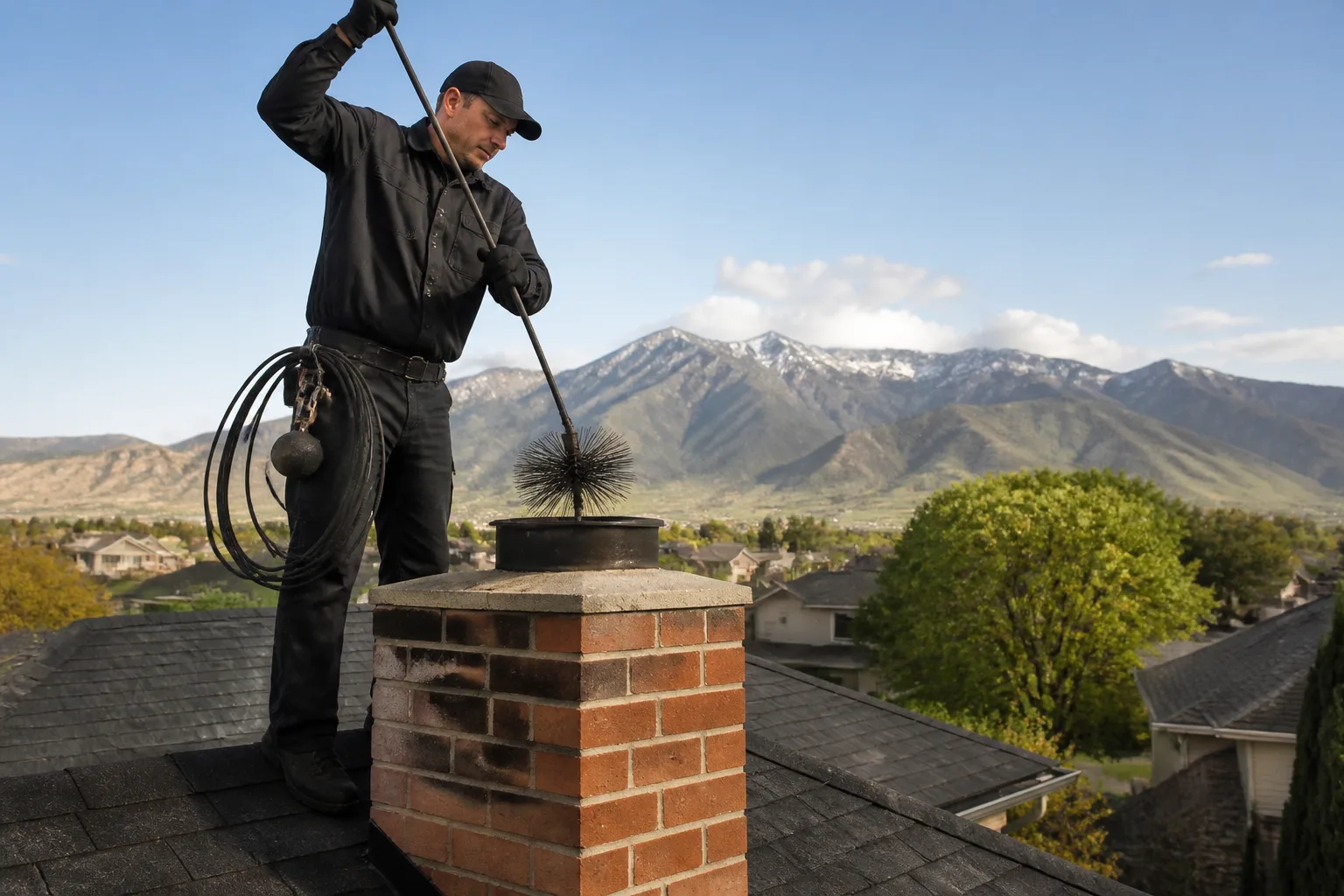
How to Choose the Right Chimney Cleaning Company in Layton
Most guides to hiring a chimney company stop at one line: make sure they’re CSIA certified. That’s the minimum bar, not the finish line. A sweep certification tells you someone passed a test on cleaning a flue. It says nothing about whether they can look at a cracked crown, a deteriorated liner, or a rusted damper and tell you what actually needs to happen next. In Layton, the company that’s hardest to filter out isn’t the obviously unqualified one. It’s the plausible-looking generalist who sweeps chimneys as a side line and reaches for whatever materials are on the truck. This guide gives you the questions that separate a specialist from an opportunist.
If you’d rather skip the interview process and get a straight answer about your chimney, call (888) 861-5852. Estimates are free.
What’s the Difference Between a Chimney Sweep and a Chimney Specialist?
A chimney sweep certification covers cleaning. A chimney specialist credential covers the whole system: diagnosing liner failures, rebuilding crowns, resurfacing flues, and knowing when a repair is actually necessary versus when it can wait. For a routine sweep, the distinction may not matter much. For repair work, it matters completely.
Here’s the practical split. A sweep certified only for cleaning can tell you a flue is dirty. A specialist can tell you whether the liner is failing from the inside, whether the crown has lost its slope and is funneling water into the masonry, and what a proper repair involves. Those are different skills, and in Layton’s housing stock, older fireplaces and inserts often need the second one.
Ask directly: “Do you do repair work in-house, or do you refer it out?” If the answer is a referral, you’re talking to a cleaner, not a specialist. That’s fine for a September sweep and wrong for a liner problem.
In our experience, the companies that do both are also the ones willing to tell you when nothing needs fixing. That’s the tell.
What Should You Ask About Material Sourcing?
Ask what brand of liner, cap, or crown material the company uses, and whether they stock it or source it on the day of the job. The answer tells you whether you’re hiring a specialist or a handyman with a brush.
Professional-grade chimney products come from a known set of manufacturers. Gelco and Olympia Chimney are two we work with because they’re the same lines certified chimney institutes specify, not hardware-store substitutes. The difference shows up in the details: stainless-alloy grades that hold up to flue gases, cap construction that survives a Layton winter, crown mixes that cure hard instead of crumbling after two seasons.
Questions worth asking:
- “What brand of liner do you install, and what alloy?”
- “Is that a stock item for you, or something you order after the estimate?”
- “How do you repair a cracked crown – patch it, or rebuild it with a proper mix?”
- “Do you carry liner resurfacing systems, or only full liner replacement?”
A company that stocks professional materials can answer these in a sentence. A company that sources from the nearest home center on the day of the job will get vague fast. Full chimney repair work isn’t a place for whatever’s on the shelf.
How Do You Read a Chimney Inspection Report?
A useful inspection report tells you what was found, where it was found, and what condition it’s in – with evidence you can see. A vague one protects the company that wrote it. Read it for three things: scope, documentation, and recommendations that match the evidence.
Scope. Does the report say what level of inspection was done? A Level II inspection includes a video scan of the flue, and that’s the level you want if you’ve had a chimney fire, changed appliances, or are buying or selling a home in Layton. A sweep-and-glance isn’t a Level II.
Documentation. Photos, a video record, or a written description of each defect and its location. If the report says “liner shows some deterioration” and stops there, ask what that means in inches of remaining integrity.
Recommendations. Each recommendation should point back to a specific finding. “Recommend liner replacement” with no finding behind it is a sales pitch, not an inspection.
A formal inspection is a service you can book on its own. If a company only offers inspection bundled with a cleaning, ask why. On its own, an inspection gives you an honest structural assessment before any repair is on the table.
What Are the Red Flags Specific to Layton’s Market?
Layton has a few patterns worth recognizing. None of them are unique to one company, but together they’re a useful filter.
- Seasonal pricing spikes. Chimney work gets busy heading into burning season. A quote that jumps because you waited until the first cold week is worth questioning. Ask whether the estimate holds for the job as scoped, not as scheduled.
- Bundled “inspection plus sweep” deals that skip Level II protocol. A deal price is fine if the inspection is real. It isn’t fine if the video scan doesn’t happen and the report is a checkbox sheet.
- Door-to-door solicitation after windstorms. Wind events bring out contractors who weren’t in town last week. If someone knocks after a windy stretch and offers to check your cap or crown, ask for their credentials and a written scope before anyone goes on the roof.
- Estimates given from the driveway. A crown or cap can’t be assessed from the sidewalk. If a number is quoted without anyone looking at the flue, it’s a guess.
None of this means every crew that knocks is a problem. It means the specialist will be the one who shows you why the repair matters and what it costs, not the one with the best opening line.
Why Does a Photo of Your Flue Matter?
A company willing to show you photos from inside your flue during the visit is telling you something: it has nothing to hide. The camera goes down the flue, the technician shows you the screen or the photos, and you see the same defect they’re about to recommend fixing. That single practice is one of the most reliable trust signals you’ll get.
Ask for it. If the answer is “we’ll get that to you later,” that’s your answer. A genuine assessment includes the evidence, and the evidence is yours to keep. It also protects you: a documented inspection is useful for a real estate transaction or an insurance claim, and it gives you a record of the flue’s condition before anything is done to it.
If a repair is recommended, the photos should connect to it. If they don’t, ask again. The gap between “here’s what I found” and “here’s what I recommend” is where a real assessment lives or falls apart.
When to Call a Pro (and When to Wait)
Not every chimney needs urgent attention. That’s worth saying plainly, because the hesitation most homeowners feel is being told they need thousands of dollars in work they can’t verify. If the liner is sound, the crown is intact, and the flue is clean, the honest answer is that nothing needs doing. We tell people that. A company that can’t say it isn’t giving you an assessment.
Call a pro now if:
- You’ve had a chimney fire, even a small one you think went out on its own
- You smell creosote or gas in the room
- The masonry has visible cracks, spalling, or white staining
- Your carbon monoxide alarm has gone off, or you have no alarm near the fireplace
- It’s been more than a year since the flue was swept and you burn regularly
If none of those apply and your last inspection was recent, waiting until the season turns is reasonable. An annual chimney sweep and inspection is the baseline, and it’s cheaper than a rebuild.
Related services in Layton: chimney sweeping, fireplace repair, chimney cap and crown installation, liner resurfacing, and formal inspections.
What to Ask Before You Book
You now have the checklist. Here’s how to run the call.
- Ask what level of inspection they’ll do and whether it includes a video scan.
- Ask what brand of liner and cap they install, and whether they stock it.
- Ask whether they handle repairs in-house or refer them out.
- Ask whether you’ll see photos from inside the flue during the visit.
- Ask for a written estimate that separates the sweep from any repair.
A company that answers all five clearly is a specialist. A company that deflects two or three is telling you what it is. In Layton, you have enough choices that you don’t need to gamble on an answer you didn’t like.
The Bottom Line
The minimum bar is real: a certified sweep is better than an uncertified one. But the question worth asking is whether the company you’re hiring is a specialist in the whole chimney system or a generalist with a brush. Material sourcing, inspection depth, willingness to show you the inside of your flue, and a written scope that matches the findings will tell you more than any badge. When a company tells you your chimney is fine and can show you why, that’s the one to keep. If it’s not fine, you’ll know exactly what needs doing and what it costs before anyone starts.
If you’re in Layton and need help, Chimney Sweep Layton offers free estimates. Call (888) 861-5852. We answer 24/7, with fast dispatch from 7am to 7pm, Sunday through Friday.
Frequently Asked Questions
A routine sweep and inspection typically falls in the range you’d expect for a single-flue residential fireplace, and the written estimate sets the final price. Pricing depends on the flue’s condition, access, and whether a Level II inspection is included. Call (888) 861-5852 for an exact quote. Estimates are free.
You need a Level II inspection if you’ve had a chimney fire, changed appliances, moved into a new home, or are buying or selling. A routine sweep doesn’t include a video scan of the flue. If you’re not sure which applies, ask the company to explain the difference before they book.
Once a year for a regularly used fireplace, and more often if you burn heavily or burn unseasoned wood. The sweep is the baseline. The inspection is what catches liner and crown problems before they become repairs.
Creosote builds up in the flue and becomes flammable, and small cracks in the liner or crown go unnoticed until they’ve spread. That’s the real risk, not the visual soot. A yearly sweep and inspection is the cheapest way to catch a problem while it’s still small. Call (888) 861-5852 to book one. Estimates are free.
When you’re ready, reach out to Chimney Sweep Layton and we’ll walk you through what your chimney actually needs.
Written by the team at Chimney Sweep Layton.
Need Chimney Cleaning Help?
Call Chimney Sweep Layton - the local pro we connect you with is licensed and insured, here with fast help in Layton.
(888) 861-5852