
HeatShield Chimney Sweep in Layton: A Homeowner’s Guide
If a technician recommends HeatShield after your chimney sweep, the question you should ask first isn’t “how much does it cost” – it’s “what does my Level II inspection show about the liner’s current condition.” HeatShield isn’t a cleaner or a quick patch. It’s a ceramic resurfacing system for a deteriorated flue liner, and whether your Layton chimney qualifies depends entirely on what the inspection finds inside. This guide walks through the product, the process, and where it stops being the right answer.
What HeatShield Actually Does Inside a Flue Liner
Most chimneys in Layton are lined with clay tile. Over years of heating and cooling, the mortar joints between those tiles erode and the tiles themselves develop cracks. A crack that looks cosmetic in a photo is often the exact path hot gas and creosote use to reach the wood framing behind the flue.
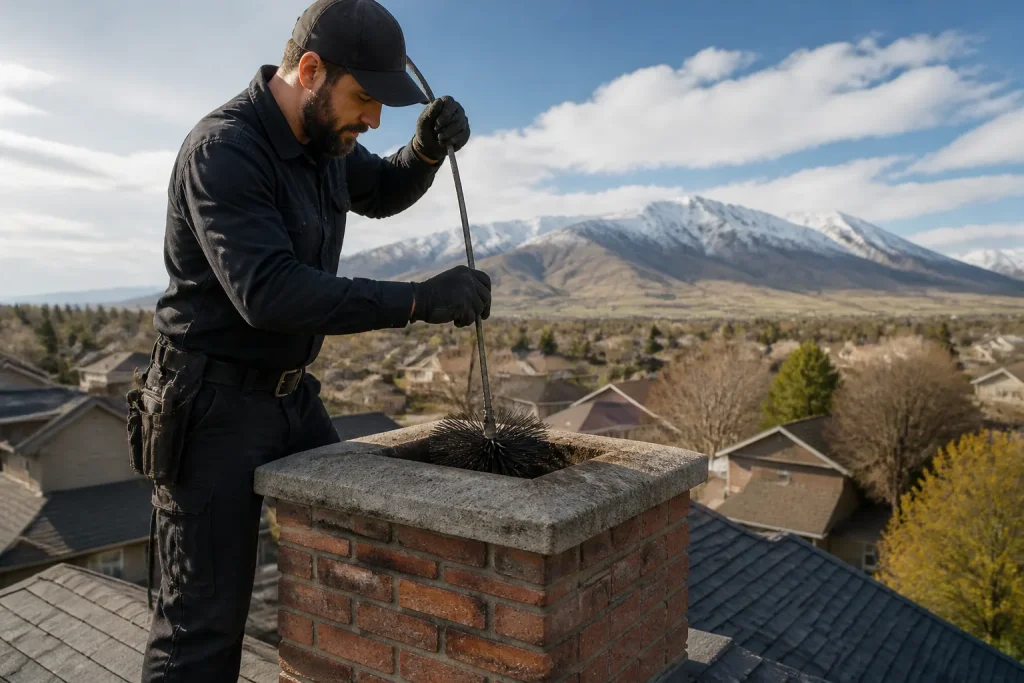
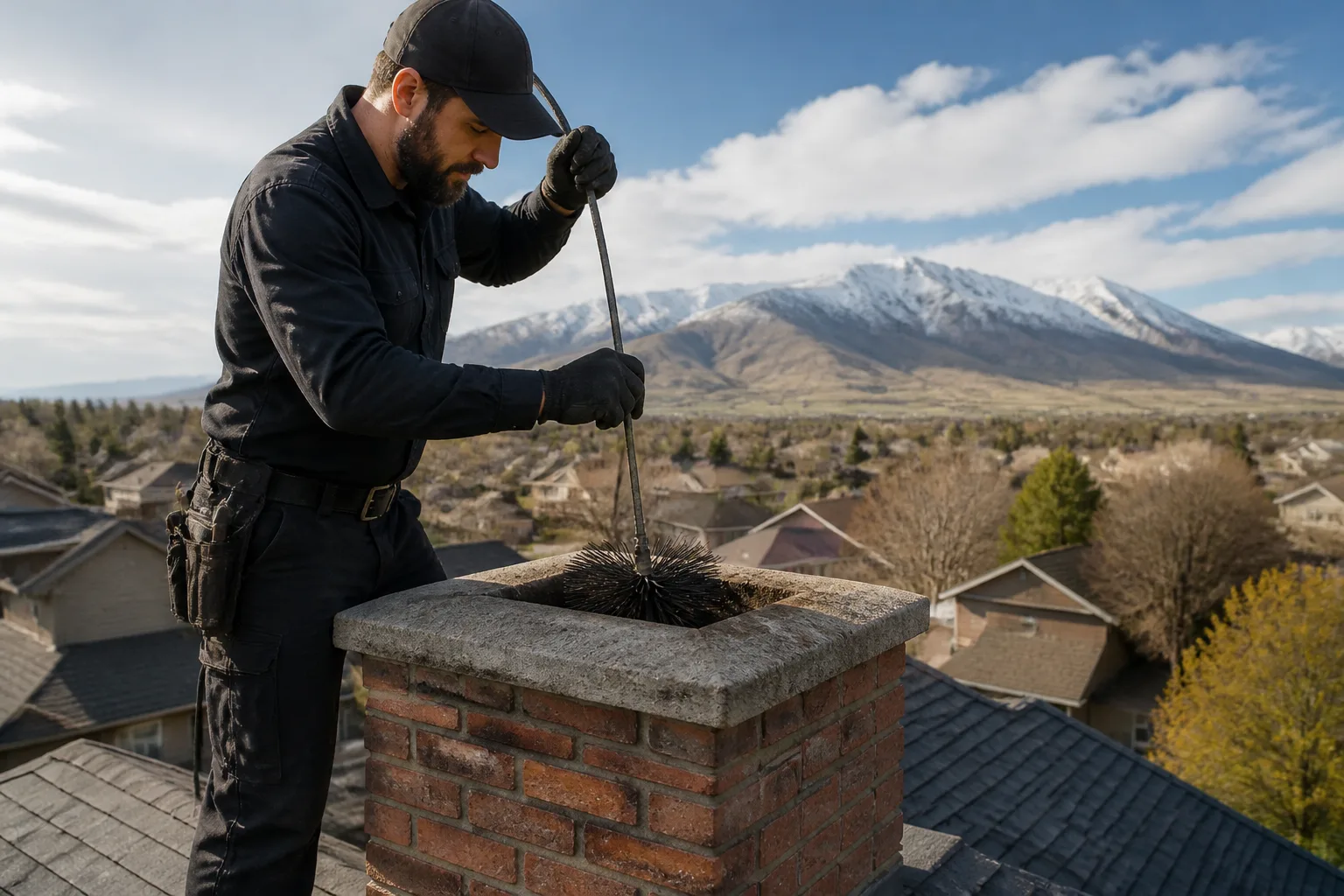
HeatShield’s Cerfractory Flue Sealant is a ceramic-based mortar that bonds to the existing tile and rebuilds the liner’s inner surface. It isn’t paint. It’s applied with a specialized tool that travels the length of the flue, pressing the sealant into cracks and reshaping the interior to its original profile. The result is a smooth, gas-tight channel where there was a compromised one.
That distinction matters. A cheap sweep that brushes the flue and leaves cleans the surface without addressing the structure beneath it. We use HeatShield because it’s a repair at the material level – the same brand certified chimney institutes specify, not a hardware-store substitute. From the firebox to the crown, every part of the system gets covered.
Which Liners Qualify for HeatShield – and Which Need a Stainless Liner
HeatShield is the right call for some chimneys and the wrong call for others, and the inspection is what tells you which. Here’s how we sort it:
- Good candidates: Clay tile liners with hairline cracks in the tiles themselves, eroded mortar joints between tiles, or minor spalling where the tile is chipped but the flue’s overall structure is intact.
- Poor candidates: Missing tiles, tiles that have shifted out of alignment, large gaps, or flues where the liner has partially collapsed. Those need a full rebuild, not a resurfacing.
- Wrong application: An oversized flue or a chimney that was never lined at all. HeatShield restores a liner; it doesn’t build one from nothing.
When a clay liner is beyond saving, DuraFlex flexible stainless liner is the professional standard for relining a deteriorated or oversized flue. It’s a different tool for a different problem. What matters is that we carry both options, so the recommendation is driven by what your chimney needs, not by what we happen to stock.
One Layton-specific wrinkle: the freeze-thaw cycle along the Wasatch Front is hard on masonry. Water gets into a hairline crack, freezes overnight, expands, and widens the gap – sometimes in a single season. That makes early intervention on small cracks more valuable here than in a milder climate. What would be a watch-and-wait crack somewhere else is often a fix-now crack in Layton.
How HeatShield Application Works in a Layton Home
The installation generally follows the same sequence in most Layton homes. Here’s what to expect:
- Level II inspection first. A camera inspection documents the liner’s condition from top to bottom. No HeatShield recommendation happens without it.
- Prep and cleaning. The flue is swept and any loose debris is removed so the sealant can bond properly.
- Application. The Cerfractory sealant is applied with the specialized tool, working the length of the flue to fill cracks and restore the inner profile.
- Cure time. The sealant needs time to cure before the chimney goes back into service. We’ll tell you the exact window for your job.
- Final inspection. A follow-up camera pass confirms the resurfaced liner is smooth, continuous, and gas-tight.
During the cure period, the chimney can’t be used for fires – that’s the trade-off for a permanent repair. The rest of the house stays livable. You’ll know the cure window before we start, so there’s no surprise mid-job. We answer questions throughout the process, and the written estimate you get before booking is the price you pay.
For homeowners in Layton who use their fireplace regularly through winter, scheduling the application before burning season starts is the cleanest way to avoid the cure-period headache.
Why the UL Listing Matters for Your Insurance and Your Sale
HeatShield is a UL-listed system. That listing is not a marketing badge – it means the product has been tested to a recognized safety standard and evaluated for use as a chimney liner repair. For homeowners, that translates into two practical consequences.
First, insurance. Many homeowners’ policies require a code-compliant, properly lined chimney. An unlisted product applied by an uncertified technician may not satisfy that requirement, and it can complicate a claim if a chimney-related loss ever occurs. A UL-listed system with documented installation is the defensible position. We can work with your insurer if documentation is requested.
Second, resale. Layton has a steady real estate market, and chimney condition shows up in a buyer’s inspection. A documented HeatShield installation – with before-and-after camera evidence – is a point of confidence in the disclosure package, not a liability. When we perform a standalone inspection, we provide a documented assessment you can use for a real estate transaction or insurance purpose.
This is the kind of work most local sweep companies don’t carry or know how to apply. That’s not a sales line – it’s why we hear from Layton homeowners whose previous sweep “didn’t do that kind of thing.”
Lifespan, Follow-Up Inspections, and Utah’s Freeze-Thaw Climate
A properly applied HeatShield resurfacing is designed to last for decades under normal use. What protects that investment in Layton isn’t a maintenance plan – it’s attention to the freeze-thaw cycle and a regular inspection rhythm.
Here’s what we recommend:
- Annual sweep and inspection. An annual cleaning keeps creosote buildup in check and lets a technician see small changes before they become structural.
- Post-application check. A follow-up inspection a year after installation confirms the sealant has cured evenly and is holding.
- Crown and cap attention. Water is the enemy of any masonry liner. A sound crown and a properly fitted cap keep rain and snow out of the flue and reduce the freeze-thaw stress on the tile and sealant beneath.
- Watch for spalling after hard winters. Loose masonry fragments in the firebox or at the crown are a signal to look again, not a sign the system has failed.
We tell you what we find. If your chimney is fine, we say so. If a HeatShield application would help but isn’t urgent, we say that too – some repairs can safely wait a season, and we won’t manufacture a reason to rush you. Built to last, not built to get us back next season. That’s the standard we hold to, and it’s why homeowners in Layton keep coming back when the next checkup is due.
To set up an annual chimney sweep and inspection so you have fresh eyes on the liner every year, call or book online. If the inspection turns up structural issues beyond the liner, we also handle chimney repair and fireplace repair under the same roof.
When to Call a Pro
If you’re seeing cracked or missing tiles in your firebox, a crumbling crown, loose masonry in the flue, or a chimney that drafts poorly or smells smoky even when it’s not in use, those are signals a trained technician should evaluate. A Level II inspection is the honest starting point, and our technicians have up to 8 years of experience reading exactly these signs.
The Bottom Line
HeatShield isn’t a cleaning upgrade or a quick fix. It’s a ceramic resurfacing system for a deteriorated clay liner, and its value depends entirely on whether your flue’s condition matches its purpose. Cracks and eroded joints? Good candidate. Missing tiles or a collapsed liner? You likely need a stainless DuraFlex reline instead. What matters most is getting a proper camera inspection first, so the recommendation is grounded in what your chimney actually shows.
If you’re in Layton and need help figuring out whether HeatShield is right for your flue, Chimney Sweep Layton offers free estimates – call (888) 861-5852. We answer 24/7, and fast dispatch from 7am to 7pm runs Sunday through Friday. Every estimate is per job and set by the written estimate, so there’s no fee to find out where you stand. If you’re starting from scratch, our Chimney Sweep Layton team can schedule a sweep and inspection to get you the information you need.
Frequently Asked Questions
HeatShield is a repair. The Cerfractory Flue Sealant is a ceramic-based material that bonds to a damaged clay liner, filling cracks and rebuilding the flue’s inner surface. It’s not a cleaner and it doesn’t replace a sweep. It’s a resurfacing system applied after the flue is cleaned and inspected. Call (888) 861-5852 for an exact quote – estimates are free.
The only reliable way is a Level II camera inspection, which shows the full length of the liner and its condition. Hairline tile cracks and eroded joints typically qualify; missing tiles, shifted sections, or a collapsed liner usually don’t and point toward a stainless DuraFlex reline instead. We’ll tell you which category you’re in. Call (888) 861-5852 to schedule an inspection.
The application itself is typically a one-day job, but the sealant needs a cure window before the chimney goes back into service. Your technician will confirm the exact timing for your installation. Plan to hold off on fires during that window. For a written estimate specific to your chimney, call (888) 861-5852.
When the existing clay liner is structurally sound enough to resurface, HeatShield often comes in below a full liner replacement – but the comparison only makes sense if your liner actually qualifies. If the liner is beyond saving, a stainless DuraFlex reline is the correct fix, and HeatShield isn’t an option. Neither answer is the “cheap” one; it’s the right one for your chimney. Call (888) 861-5852 for a free estimate and an honest assessment.
Written by the team at Chimney Sweep Layton.
Need Chimney Cleaning Help?
Call Chimney Sweep Layton - the local pro we connect you with is licensed and insured, here with fast help in Layton.
(888) 861-5852